cimorene: Cut paper art of a branch of coral in front of a black circle on blue (coral)
I can't get excited about fandom right now, or at least can't find a fandom to get excited about right now, but I can always get excited about the history of the decorative arts.

I've been reading vintage magazines to try to immerse myself more in the worldview, the history, and the language of the period I love most (centered on 1920s, but including the whole between-wars period, the Golden Age of detective fiction, etc), and the last few weeks of browsing and reading Vogue and Harper's Bazar; Ladies' Home Journal, Woman's Home Companion, Pictorial Review, and McCall's; and House Beautiful, Better Homes & Gardens and House & Garden from the 1890s-1930s (on HathiTrust and Internet Archive mostly; there are various websites that collect links to vintage magazines online) have deepend my understanding of the period so much. A lot of that is general information about the period, turns of phrase, discourse style, beauty and graphic design styles, and bits of trivia. But it's also filled in a huge gap that I didn't even really understand was there in my knowledge of the history of decorative arts and design.

I'm super excited about my new understanding of early 20th century romanticism right now. Which is highly related to and mostly the same thing as national romanticism, a trend stretching back to the 19th century; but also an aesthetic and stylistic background that was actually more commonplace, more widespread, than the influence of art deco and art nouveau and midcentury modernism in their respective periods, but is often overlooked when culture looks back. I knew the term "romanticism" in visual arts and design before, of course. In the 19th century it links up with the arts & crafts movement; in the 20s and 30s, my understanding was vaguer: cutesy florals and... folk art? I now know that yes, it was that, but it was so much more than that: it was historical nostalgia expressed in historical eclecticism, the dominant aesthetic being an expression of a cultural obsession with creating and glorifying a personalized, domesticated patriotic past.

It was still very much tied to the project of creating the nation-state, in this case mainly through oodles of mass-produced imitation antique furniture marketed as "early American" or "Tudor" or "Gothic" or "French provincial" or "Empire". (Genuine antiques and reproduction antiques were also popular or at least popularly admired, don't get me wrong; but a great deal of the mass-produced furniture in this period was more about an antique vibe than about any sort of realism - something that was also very much true of the earlier explosion of Victorian-era "revival" styles caused by the initial spread of industrialization and an earlier ballooning of the middle classes. Victorian-produced furniture and design styles are also very much historical eclecticism.) This continued into the midcentury, when the pastiche styles previously called "early American" and "Tudor" had evolved into what was then generally referred to as "Colonial" (they meant American colonial specifically), exemplified by the mid-century modest ranch house's frequent pine kitchen and fake wrought iron and hammered brass hardware. Midcentury American ranches are iconic today, but the national imagination is inclined to populate them with mid-mod and streamline modern in blocks of color and metal-trimmed laminates; but in the period, the pine kitchen and the gingham ruffle were actually far more popular, even at modernism's height.

I'm focusing on American history in this narrative because I'm reading American magazines, but this was happening all over Europe. National romanticism in the 19th century produced a flourishing interest in cultural history and folk art in Europe too, and the same historical-vibe furniture recalling pre-Industrial styles was mass-produced for a growing middle class across Europe in the early 20th century. In Finland and Sweden the style was dominated by Gustavian (early 19th century, neoclassical) and rococo and baroque styles, often simplified, but the Nordic countries were leaders in modernism from the 1930s onwards, which changed the picture somewhat. Dipping into museums and auction sites from Finland and the Scandis brings a strong wind of light woods and simplified forms, painted instead of dark-stained wood, and a healthy admixture of functionalist/Bauhaus styles. And also way more actual crystal and imitation crystal chandeliers. Finns and Swedes fucking love their crystal chandeliers. I can understand their cultural history and dark winters and all that before the invention of electric lighting, but they still need to pump the brakes a bit. Chandeliers do not belong in your kitchen or bathroom, guys.
cimorene: A psychedelic-looking composition featuring four young women's heads in pink helmets on a background of space with two visible moons (disco)
Last time I updated about my learning to drive stick/standard shift I posted this, you may remember:

Total cost:

Application fee: 25€
Driving lessons: 875€
ADHD tax: 152€


Incorrect. That was my total cost thus far, but I forgot the fees for the theory test and the driving test! I have now reserved a time for the theory test on August 14.

Theory test fee: 40€
Driving test fee (not booked yet): 99€

Total: 1191€


I'll have to take the bus to Turku to take it at the nearest Ajovarma office. Read more... ) I have been studying the badly-translated textbook that came with my driving class (and also the good Swedish translation and occasionally the Finnish original, for clarity) and going through the test practice questions. I passed the first full practice test I took yesterday, but at about 70%, so I'm trying to make it so I know the answers to all the questions.

Friday I had a second lesson with the driving simulator, and it was much better than the first one. It was fun actually! But I completely failed to manage to start the car on a hill again (I failed to do this in my first simulator lesson like 8 times in a row and the teacher, after coaching me through the steps and explaining it, just gave up and reset the lesson lol) and had to reset it. Now I've read in the textbook I realize it's because the hill in the simulator was too steep for the instructions he gave me the first time (on a gentle slope you only need the brake, but on a steep hill you need the parking brake as well - terrifying).

BONUS OFF-TOPIC FUN FACTS: READING AND BANNING

  1. After we watched the season finale of the Murderbot show, and I discussed it extensively with both my sister (who is extremely ALL CHANGE IS BAD CHANGE) and [personal profile] waxjism (who is not, but was annoyed because the show felt too YA for her, although she didn't HATE it), I reread the books. I had reread All Systems Red before the show; last week I reread it again, then all the others, and then I read the newest short story, Rapport: Friendship, Solidarity, Communion, Empathy (about ART and its crew). And after that for days I just wanted MORE and didn't want to read anything else, but the next novel isn't out yet; I reread Artificial Condition again and started Network Effect again, and skimmed through the tags on AO3 and Tumblr to see what people are saying... but it wasn't really satisfying. When I'm interested in a ship that is non-sexual in nature, I rarely find what I want from fandom, and that's what happened again (though there is some gen friendship fic and some queerplatonic fic on AO3). I can't begrudge people their desire to sexualize nonsexual relationships, because I've definitely thought that was fun before. I wrote Finding Nemo slash (and I stand by that). But when you don't want to read that, and I don't, your odds are simply worse, because there's less of it.

    Unlike my sister, I didn't hate the show, but I was even more annoyed by what Wax called "YA" writing choices than she was. I'm not sure if she can stand to watch it with me when the next season comes out, because I find it very hard to shut up when I'm annoyed at tv. I am happy with the casting and have no problem with the acting - all the things that I disliked are what I consider objectively bad adaptation and writing choices. But it was still fun and watchable when considered as its own work in isolation from the books! Just weirdly and unnecessarily YA in tone.


  2. For fans of banning/blocking, the action, you'll be pleased that I banned someone from my design blog [tumblr.com profile] designobjectory last week! I like all ages and periods of decorative arts, but my blog contains a lot of my special interests - midcentury modern, Bauhaus, Art Deco and Art Nouveau, and Swedish and Finnish design (mostly 20th c). Somebody reblogged one of my MANY posts of Finnish midcentury light fixtures by Finnish lighting titan Lisa Johansson Pape (one of the many times I've posted a variant of her 44 cm. diameter metal pendant lamp shade, which is still in production by Innolux)... anyway, somebody reblogged it with a comment sort of like "This is the ONE Scandinavian modern thing I like lol. I hate light birch furniture!" My blog is extremely heavy on light wood because of my strong interest in Swedish and Finnish 20th century design! So I blocked them. First I asked Wax if that was too unreasonable and she laughed a lot and said that it's never unreasonable to block people on your own blog. Maybe a little weird though. I mean, probably. But it's so thrilling and satisfying to block someone.


  3. Ever since DW made it so you can type @ + username to create the little username embed ([personal profile] waxjism), I have completely switched to it and whenever I want to use the version that links to another site I forget what the code is and end up having to google it. I mean, to search the DW faqs. This is the third time it's happened. That's because it's user name, with a space between. I always forget that.

what's up

3 Jun 2025 12:34 am
cimorene: closeup of four silver fountain pen nibs on white with "cimorene" written above in blackletter (blackletter)
1. I used to spend maybe 8-12 hours per week on a sideblog on Tumblr for images from the history of the decorative arts. Then I succumbed to the idea of talking to the followers directly (it has around 8000 which is waaaaaay more than my normal Tumblr or my pet photo blog) and got some asks that threw me into social confusion and then shame and avoidance and I just didn't update it for like three years. In retrospect, also, the amount of time I was spending on it shortly before I stopped was not practical and sustainable. But I got into a discussion about rococo, and started looking some things up in curiosity, and I had never posted very much about rococo before. And now I started posting there again a bit! (It's called [tumblr.com profile] designobjectory.) It started a week ago with curiosity about the early output of KPM porcelain (the royal porcelain manufactory of Prussia originally, iconic) and has led to the discovery of Weimar classicism in the form of Goethe's house.

2. I inked my two 1.1-mm stub nib fountain pens — well, actually, a Lamy Safari 1.1-mm stub and a vintage Pelikan 400 (mine is brown tortoiseshell, a holiday present a few years ago) with a (pre-existing) custom oblique stub that is about 1.1. — and have been practicing calligraphy a bit, which I haven't done in a while because I haven't had any of my italic pens inked. I spent some time on Gothic capitals, because I want to do more Rotunda, and then Carolingian, which I haven't bothered practicing in the longest time.
cimorene: an abstract arrangement of primary-colored rectangles and black lines on beige (bauhaus)
YouTube showed me a video called Bauhaus Women about the female artists and designers associated with the Bauhaus school and movement in 1930s Germany.

I shouldn't have been as surprised as I was to learn that basically every famous male name associated with it was kinda a piece of shit. If this documentary is correct (I'm thinking I'll have to buy at least one book about this now) then:

Paul Klee and Wasily Kandinsky both believed that women couldn't do fine art, only crafts, because they don't have the "creative genius" required, and they didn't want to teach them art. (Possibly their fragility was encouraged by the success of female art students in the first year, including Jewish polymath Friedl Dicker, who was later killed at Auschwitz.) (Yeah, it was the 30s, other artists thought this, but not even all the followers of the official Academy styles thought that anymore at this point. So it's even more embarrassing.)

Walter Gropius (founder, boss, ground-breaking architect) initially had very utopian ideals and threw open student recruitment emphasizing gender equality, but after they got more female than male students to begin with, he got SGA/Supernatural syndrome, or at least worried that his and the school's funding and reputation would suffer if they were seen as too female, and made new rules limiting female students to the study of weaving only and announcing that female brains couldn't think in 3D and were not suited for architecture and design. This didn't stop him from making exceptions for female designers whose work was bringing money and media attention to the school.

The lone female professor (of weaving), Gunta Stölzl, was only hired after agitation and campaigning by the students, even though she was running the weaving workshop and for years had been responsible for it bringing in more money than any other department. She still was never given benefits or a permanent contract.

Many of the most commercially successful designers were women (Marianne Brandt, Alma Siedhoff-Buscher) and were pushed out once they married or had children.

All the most famous photographs of the school and in the contemporary catalogs were taken by Lucia Moholy, wife of professor László Moholy-Nagy, for free apparently, and when she had to flee the country due to being Jewish many of her negatives were left behind. She then spent decades battling Gropius for her copyright.

Now, these stories are, after all, not that shocking for the 1930s and university settings. But the Bauhaus was set apart, from its conception and all its self-advertisement as a representative of the progressive wave of modernity, besides explicitly recruiting women with promises that were later walked back. It was full of free love, just not freedom to study architecture and metalwork (Marianne Brandt was given an exemption to do that).

I was struck when watching this by the comparison with William Morris's Arts and Crafts movement. As discussed in this post, there were many ideological similarities between the Arts and Crafts movement and the Bauhaus movement, and historical ones too, ie that the designers' ideas about the democratization of art and design, designing beautiful and functional objects for the homes of ordinary people, were ironically lost very quickly, with fashion and manufacturing costs leading them to end up making trendy fashionable overpriced objects for the bourgeois instead, even though in the case of Bauhaus the other big element of the ideology is industrial design. This happened even though they were mass-produced!

William Morris's daughter May was a major designer for Morris & Co in the Victorian/Edwardian era, and she was not the only prolific woman designer employed there before the foundation of the Bauhaus. I have not read much on the history of the company, but at first glance it looks like female artist representation is at least slightly better in the Arts & Crafts movement than in the Bauhaus, and that's. Well.

I do not yet have time to replace all my Klee and Kandinsky etc icons with icons of the work of female avant garde artists, but I am feeling the impulse.
cimorene: closeup of Jeremy Brett as Holmes raising his eyebrows from behind a cup of steaming tea (eyebrows)
Some quotes from things I've read recently that gave peculiar insight to the society in which they were written.

On Earth a woman may not look her glamorous best in the harsh light of early dawn, but if she’s really beautiful she doesn’t look too bad. On Mars even the most beautiful woman looks angry on arising, too weary and tormented by human shortcomings to take a prefabricated metal shack and turn it into a real home for a man.
-Frank Belknap Long looking at pre-WW2 America through the lens of bad science fiction and revealing that he thinks a woman of real beauty will still look kind of bad in natural light, which seems like a peculiar definition of SOMETHING although I'm not sure what

Darnell had received what is called a sound commercial education, and would therefore have found very great difficulty in putting into articulate speech any thought that was worth thinking.
-Arthur Machen making me curious for the first time about the phrase "sound commercial education" in the Edwardian era

“The floor would have to be stained round the carpet (nine by nine, you said?), and we should want a piece of linoleum to go under the washstand. And the walls would look very bare without any pictures. [...] And, my dear, we must have some ornaments on the mantelpiece. I saw some very nice vases at eleven-three the other day at Wilkin and Dodd’s. We should want six at least, and there ought to be a centrepiece. You see how it mounts up.”
-Arthur Machen with a devastating portrait of English Edwardian suburban middle class interior design. I'm horrified by the thought of all these guest rooms with the floors only stained around the edges and fascinated by the idea that a guest room mantelpiece is naked without at least six pointless vases and a centrepiece

Next day, a little before noon, Spargo found himself in one of those pretentious yet dismal Bayswater squares, which are almost entirely given up to the trade, calling, or occupation of the lodging and boardinghouse keeper. They are very pretentious, those squares, with their many-storied houses, their stuccoed frontages, and their pilastered and balconied doorways; innocent country folk, coming into them from the neighbouring station of Paddington, take them to be the residences of the dukes and earls who, of course, live nowhere else but in London. They are further encouraged in this belief by the fact that young male persons in evening dress are often seen at the doorways in more or less elegant attitudes. These, of course, are taken by the country folk to be young lords enjoying the air of Bayswater, but others, more knowing, are aware that they are Swiss or German waiters whose linen might be cleaner.
- J.S. Fletcher providing local color about Edwardian London

As for him, he was naturally somewhat dashed by the consciousness of duty unfulfilled, but more so by the prospect of a lawn-tennis party, which, though an inevitable evil in August, he had thought there was no occasion to fear in May.
- M.R. James revealing what the Victorian gentleman really thought about lawn tennis parties, unless he just has a phobia?

"What was I saying? Well, anyhow it comes to this, that it must be Thursday in next week at least, before you can go to town again, and until we have decided upon the chintzes it is impossible to settle upon one single other thing.”
- M.R. James revealing a delightful fact about rural Victorian life wrt chintz. Personally I adore chintz, and obviously I knew that it was important to the Victorians, but the idea that you can't furnish a room until you've bought the chintz is just incredibly fun.

His interrupter was one of those intelligent men with a pointed beard and a flannel shirt, of whom the last quarter of the nineteenth century was, it seems to me, very prolific.
- M.R. James with a new (old) Type of Guy that I'm fascinated by: I did not know there were flannel shirts among Victorian gentlemen. I imagine they were not plaid/tartan flannel and would love to know what they actually were like. Is this guy the mid-19th century London gentleman's Brooklyn hipster? Or is he more like an absent-minded professor?
cimorene: Blue text reading "This Old House" over a photo of a small yellow house (knypplinge)
I was asked to talk some more about wallpaper, and I love to talk about wallpaper!

I grew up prejudiced against wallpaper, because Read more... )

But when we bought our 1950 wooden house in 2019 and dove into researching it we learned that wallpaper was the most common, expected wall treatment for it. I wasn't even willing to consider moving in without changing the wall surface treatments of every single room in the house, on initial walkthrough. ([personal profile] waxjism agreed that things were mostly ugly, but she would totally have been willing to live with some of it for a while, and some of it forever, and my mother-in-law didn't see anything wrong with some of the wallpapers, but was just ¯_(ツ)_/¯ about my aesthetic preferences.) When we bought the house, the existing wallpapers and wall treatments were as follows: Read more... ).

The downstairs walls of our house are actually made out of stretched cardboard, a common and inexpensive wall material at that time that was sold on giant rolls, soaked to soften it, then stretched out evenly in all directions and nailed to the framing timbers on all four sides. This construction method was designed to be wallpapered over. We learned that we could also paint the walls as long as the paint wasn't a vapor barrier (no plastic content: traditional oil paints or distemper, tempera, or mineral paints), and we were very attached to my idee fixe that paint is cheaper and better than wallpaper; so we actually did this. We regret it! Wallpaper was the style- and period-appropriate choice and the better choice for our wall type, more forgiving of errors. The distemper-painted walls in our dining room look fine, but distemper is vulnerable to physical wear. The 0-VOC linseed-based eco paint we used in the living room took me like two weeks and like six coats because we chose a medium green and it wasn't opaque in any less. This paint also takes a long time to cure to full hardness, and as a result has various dings in it. We could've papered this room in a similar shade of solid green paper for about a third the cost and a tenth the effort, but again... we were not wise yet.

A primary consideration for us was choosing period-appropriate wallpaper and curtains that would fit the architecture and feel of the house.

Kitchen.
[personal profile] waxjism and I have both posted before about how we later spotted our kitchen wallpaper, by the Swedish Boråstapeter, in The Queen's Gambit (I know now that they filmed it in Europe in order to work with my idol, German production designer Uli Hanisch, so it makes a lot more sense to find the paper there...). (Illustrative screencap in an old post of Wax's here; product page here.) We fell in love with this paper when we saw a sample in a rack by the door at a wallpaper shop in Turku, actually, but we had already bought the backsplash tiles you can see here behind Sipuli from a local guy on Finland's equivalent of Craigslist (tori.fi).Read more... )

Curved entryway wall.
There's a picture of this up above in its current wallpaper, Sanderson Hampton Trellis. (A couple more are available in this old post about my beloved rainbow ball coatrack.) I fell for this kelly-green paper with its large-scale white geometric trellis print early in house research and so did [personal profile] waxjism. We knew immediately that we needed a bold contrast treatment for this curved feature wall, but we didn't decide on this paper immediately because it's by far the most expensive wallpaper we bought for the house. I spent like a year looking for an alternative that we liked even slightly as much that cost less, and we could never find one that we could be happy with. You had to visualize the size of the curved wall and its place in the room, and it needed to be a bold pattern of a certain scale with a strong contrast in it, and it turned out that most of the alternatives I could find weren't available in bold enough colors or in the right scale. It isn't 1950s, but there was a trend of chinoiserie (of which this sort of trellis wallpaper is an outgrowth) and also a trend of trellis wallpapers specifically during the 1960s (and the bathroom itself, and hence the curved wall, were added to the house around 1960 - our house and all its DIY clones from the same plans are designed to be built in stages, initially without plumbing, with bathrooms and kitchen sinks etc added later when the family could afford it). This doesn't really look quite like the 60s ones I've seen, but the connection is enough to satisfy me. The kelly green harmonizes nicely with the muted blue-green shades that dominate in the kitchen. I liked a few Pihlgren & Ritola alternatives that all weren't quite right for some reason, like Snowflake (black and white is bold but we prefer colorful!) and Pinecone (same, but mainly the scale was just too small... I really love this print and I love foresty wallpapers), Pro Finlandia (the scale is bold but the color contrast isn't! 1970s art nouveau revival vibes, a little late for us but still in the window of possibility), Paradise (60s-70s folklore/primitivism, nice bold colors and large scale, but as you see in the wall shots, the lozenges tile together into a rather even print even in the really bright colors? And we weren't SUPER into any of the color combinations.)

Living room.
As mentioned above, I painted this room a medium green with an oil-based ecological paint, chosen over distemper because the final surface can be washed with soap and water or scrubbed. We love a medium green! We love this shade! Read more... ) For these reasons we will not be repapering this room until after both of our bunnies have died, so it will probably be a few years, but I have looked repeatedly:Read more... )

Dining room.
The dining room is currently distempered with a beautiful light bluey aqua, really on the edge of off white, but it's got holes ripped in it by Anubis and spots worn out from my shoulders when sitting up in bed. We can't paint and wallpaper that room (it has a huge built-in cabinet and three small closet doors that need to be repainted in our trim color as well) until Cat Divorce is over, but we have looked and looked at wallpapers. Read more... )

Powder room.
The downstairs bathroom, or half-bath, or powder room, or WC, the one that was put in about 1960 and fully renovated before we moved in, contains the washing machine as well as sink and toilet, and because it doesn't have a shower, we didn't have to tile all the way up the walls. The wall covering should still be basically water-resistant in case of splashing of course, and there's all that construction waterproofing under the finish so the normal considerations about non-plastic wallcoverings in an old wood house no longer apply. We started with the floor tiles, which are a dark cobalt blue with a lot of color variation, again, leftovers from some local guy on Finnish Craigslist, and we got enough of them to do both our bathrooms. The upstairs is a little shower room, so the walls are tiled all the way up to the ceiling, and we chose white, so I thought the downstairs should have dark walls that blend into the floor to differentiate it. What I really wanted was this underwater wallpaper with swimming koi carp, Derwent by Osborne & Little, or Cole & Son's Acquario which has puffer fish, but I didn't consider them because of price. I was also into similar designs of blue sky dotted with birds like Daydream by Julia Rothman for Hygge & West. In the end we painted with a color matched from the tiles and then I did this undersea mural with white Posca markers and a spray-on acrylic waterproofing coat (there's a picture of it here - maybe I've never posted 360 photos of it).

Landing.
The landing is mostly painted a light sea green, but there is an alcove with this single roll of Pihlgren & Ritola Atom in a discontinued groovy lime green (here). The wall opposite the alcove is still the off-white of the stairwell panels, which we will repaint eventually I guess, but they will still be white. This wallpaper is also inside on the back wall of the wardrobe Wax built. The rest of the library is made of wood fiber panels with a finger gap, which makes it unsuitable for wallpaper. It is painted a very bright light aqua with mineral paint. We love this color, which is an outlier in terms of our palette, but the room always feels very light and bright.

Bedroom.
The bedroom was wallpapered before, and we stripped it, put up a layer of paintable brown paper and painted that with a sort of light khaki green clay paint. Love it! But in retrospect I think I would paper the room in a floral paper in a similar shade of green like Duro Vilhelmina or Boråstapeter Borosan 21 8618. Or if price were no object, Lim & Handtryck's Tjolöholm Slott.
cimorene: Pixel art of a bright apple green art deco tablet radio with elaborate ivory fretwork (is this thing on?)
EF Benson's Mapp and Lucia novels, previously mentioned a couple of times, have not only enlightened me about quaint bits of vocabulary and lifestyle and politics so far, but have also conveyed some fascinating new images of people of the time!

I am enchanted by 1920s fashion and have been since childhood, so these haven't introduced any absolutely new styles to me, except for a "Prince of Wales's cloak", which I can't find any other results for, but conjecture to be the long blue velvet coat worn by the Prince of Wales at the coronation of the monarch - images available of the current incumbent wearing the style and also of his predecessor at Elizabeth II's coronation in the 40s; the text must be referring to the prince who abdicated to allow E2's father to take the throne, the one who liked Nazis. But that's not what I meant to talk about. What I meant to talk about were these fantastic descriptions of fashion and interior decor.

  1. The decoration of the studio was even more appalling than might have been expected. There was a German stove in the corner made of pink porcelain, the rafters and roof were painted scarlet, the walls were of magenta distemper and the floor was blue. In the corner was a very large orange-coloured screen. The walls were hung with specimens of Irene’s art, there was a stout female with no clothes on at all, whom it was impossible not to recognize as being Lucy; there were studies of fat legs and ample bosoms, and on the easel was a picture, evidently in process of completion, which represented a man.


  2. This studio belongs to an eccentric socialist artist, a gentlewoman who smokes like a chimney and spits like a man, to our narrator's dismay. The first association the description brings to mind for me are American advertisement illustrations for midcentury bathroom fixtures, from that period (started in the 1930s actually) when sinks and toilets and tubs came in a rainbow of colors, and to sell them they had some absolutely wild pictures with brilliant colors on the walls and the floors as well as the fixtures, and weird carpets and curtains and bows and things like that. I've seen 1960s and 1970s features from magazines on decor with similar color schemes, but only for bedrooms. This is an absolutely gobsmacking mental image that I'm dying to see on film.

  3. She had an old wide-awake hat jammed down on her head, a tall collar and stock, a large loose coat, knickerbockers and grey stockings.


  4. This is the artist in question. She always dresses like this, we learn, and at another time the narrator refers to the style as "like a jockey". You can see snapshots of women from the period in knickerbocker outfits like this, usually for some kind of sports (although this was not the dominant outfit for sports in the 20s, but knickerbockers or jodphurs were the trousers worn for horseback riding) - the easiest to find and most widespread are of Chinese American actress and fashion icon Anna May Wong. But because I've seen so few images of this, and encountered it so rarely in the literature I've read from the period before, I wasn't sure how widespread this outfit really was. The idea that it's a suitable costume for an eccentric revolutionary artist type is pleasing to know. (PS: the Quaker Oats man's hat is a wide-awake hat.)

  5. [...]looking quainter than ever in corduroys and mauve stockings with an immense orange scarf bordered with pink.


  6. The same person in winter. Interesting that even winter did not seem to be cause for full-length trousers.

  7. Without being in the least effeminate, Mr. Wyse this morning looked rather like a modern Troubadour. He had a velveteen coat on, a soft, fluffy, mushy tie which looked as if made of Shirley poppies, very neat knickerbockers, brown stockings with blobs, like the fruit of plane trees, dependent from elaborate “tops,” and shoes with a cascade of leather frilling covering the laces. He might almost equally well be about to play golf over putting-holes on the lawn as the guitar.


  8. A completely different character. This one isn't considered an eccentric at all; everybody looks up to him, in fact, as a member of an Old County Family whose sister is married to an Italian count. This reminds me of the outfits Oscar Wilde wore.
cimorene: An art nouveau floral wallpaper in  greens and blues (wild)
Yesterday I dropped by one of the little local boutiques that sell house stuff and I got a chip basket for the firewood! Also some adorable handmade candles! I was in luck, because it was the only one she had and it was a bit old and scuffed - she had it out full of blankets for sale - so she gave me a slight discount. And the store was really nice and cozy inside. I'd never been in before, because these sorts of little stores are mostly only open on weekdays, and occasionally a few hours on a weekend. I learned some new interior décor terms in Swedish and saw a near-clone of our cast iron stove, the same shape, but hers is all enamelled white. It was lit, and the door was open! The store is the whole downstairs of a cute wooden early 20th c. house (maybe a bit earlier: I'm just guessing, without a detailed inspection). Big plank floors everywhere and piles of blankets and wool rugs, cast iron hooks and enamel door signs and crystal and china and big piles of baskets and of course, Morris wallpaper, which I still can't buy because it's expensive and the wrong period and I have nowhere to use it, but it's even more tempting when you're touching it.

But also yesterday, my work computer tried to update itself and plunged into an endless cycle of reboots, as some other people have described it. The update doesn't install correctly, and it demands that you restart, and then it says it has installed and wants you to restart, but then when you do it isn't installed. After a bunch of restarts and being unplugged and multiple attempts to simply uninstall the broken update (that doesn't work either), I concluded that you probably either need to do a clean install or go in with admin privileges and delete some sensitive bits manually. I did find some Google results that point to this type of solution, and logic tells me this is how you'd fix an issue of this type in Linux, but I don't know enough about Windows to do that to my work computer without a lot more confidence in how to restore from backups. So I called the local computer company that belongs to one of [personal profile] waxjism's second or third cousins (a descendant of a sibling of her granny who was one of nine) and they're sending a guy Thursday afternoon. The internet still works and my work laptop and the printer are all fine, but the work laptop is without a power cable, and all my attempts to email the groups who might have accidentally taken the power cable have so far come to naught. So I've gotta try to save the laptop's power a bit. It's at 56% now because I had to do some Photoshopping today, not just answering emails.

It wasn't supposed to rain today, but it's raining. I wondered why I saw so many people in raincoats on my way to work!
cimorene: Pixel art of a bright apple green art deco tablet radio with elaborate ivory fretwork (is this thing on?)
One of the most frequent and naively uninformed comments on long viral posts about art nouveau and art deco that one sees go around Tumblr is "Why can't this come back in style?"

Of course, art nouveau did come back into style in the 1970s - reinterpreted with neon colors usually, and pretty exclusively in prints and advertising art rather than architecture and object design. And art deco came back in a big way in the interiors and furniture and object design, even the architecture, of the 1970s - 1980s. Indeed, there's a strong thread of art deco (reinterpreted through a colorful postmodern lens) in the dominant design movement of the decade, Memphis Milano.

And in fact, Memphis Milano had an echo in the architecture and design of the early 2000s/late 90s. We were walking home tonight and I was making fun of some too-large, too-expensive streetlights which couldn't be more clearly Memphis Milano, but they were installed in the early noughts, my wife informs me; and when you know that, it checks out. In the noughts there was an attempt to use the shapes of Memphis Milano with a narrow color palette and lots of, like, frosted glass, and call it sophisticated. Which, when I look back on it, is one of the strangest design revivals I can think of, since colorful and playful are the overwhelming mood of Memphis Milano.

Anyway, it's not really a big surprise that people don't think of these when they are introduced to art nouveau and art deco with images of the most expensive and iconic design: mansions and grand hotels and public monuments and movie stills from The Great Gatsby. Those may help you grasp the shorthand, but they represent a tiny slice of the movement that's not representative of its appearance in the lives of ordinary people. The middle class was into art deco, but it didn't look any more like a grand art deco ballroom than ordinary working women looked like movie stars in 1920s formal gowns.
cimorene: cartoony drawing of a woman's head in profile giving dubious side-eye (precarious)
Wax and I both tend to kind of ignore presents, for the most part. We share the quality of being able to buy most of the stuff we actually want, which tends to be like things for our hobbies. We also don't attach much sentimentality to them, I guess.

(I like getting presents that are surprises, but not enough to care that much, and also I'm hard to pick things out for, so my sister - the person I talk to about my hobbies and interests the most, because she shares most of them - is the only person who's very well equipped to give me that kind of present, something you like or want enough to be pleased with but not enough to have got it yourself even though it is related to your hobby.)

I'm thinking about this because in Finland, birthdays that are a multiple of 10 are a big deal. My MIL, who was both sweet and thoughtful AND good at organizing and planning, always gave slightly fancier presents for them - in fact she gave me one of my favorite necklaces when I turned 25 and one when I turned 30. The one I got when I turned 35 was even better because it was an heirloom. But on our own, Wax and I tend to consider birthdays just another day. My SIL is just a couple of weeks younger than me, so we've always both just had a birthday when we have a Christmas reunion, and she asked me if Wax got me anything special this time and was a bit shocked that I said no. She asked for a kayak and got one. There's a good spot for it near their house, and they've already been multiple times with rented ones. That's adorable!

This year at Christmas Wax and I bought ourselves:

1. Wax and I get more enjoyment miles, or minutes as it were, out of pajamas than anything else, and we decided a few years ago to get them for each Christmas. But we didn't want to wait to open them at Christmas, so we didn't. (We got two different colors of what we agree is the perfect nightdress: Ristomatti Ratia Adina. )

2. I spent about 75€ on fountain pen stuff (a nice sturdy Twsbi Eco that I could take to work worrying able damaging it, like with my beloved Pelikans which have softer, springy nibs, and a glass dip pen, but I chipped the tip right away), and ordered about the same amount of cake baking stuff for Wax (a mousse ring and a set of piping tips and the plastic reusable foil that you use to line the mousse ring when making mousse cake, all from the delightful posh kitchen store whose invoices tragically DON'T look like wedding invitations anymore, but they sent us a free spongecloth in the last one). But obviously we didn't wrap those things.

3. I was saying we should get something we could stand to wait and open at Christmas, and I happily remembered our Rörstrand Mon Amie mugs - we had two, so I bought us two more, and then when they arrived I reminded Wax that the reason I ordered them was to have something to open on Christmas Eve but she looked at me like that was ridiculous, which, like, it was, so we just used them right away.

4. I also bought the hilariously minimalist Swedish midmod design candleholder Stumpastaken, which holds 9 tealights by default so I've been coveting one to use as a menorah for years. I laugh whenever I look at it - it reminds me of the Bauhaus nativity. For Hanukka, obviously, not birthday or Christmas.

5. Last fall we discussed me ordering a KitchenAid mixer after my first few paychecks, but I kinda rethought it. We have a Kenwood which is, yes, inferior. It's lighter, the body is plastic that's already yellowing, and it's got places you can't clean bread dough out of without taking it apart. It's got attachments that are not stainless or enameled so they can't be washed in the dishwasher. But we use it comparatively little. Wax has gotten really into making cakes and she bakes much more than me these days, but usually with the hand mixer. Since all the Korean and Japanese pastry chefs on YouTube that we follow primarily use hand mixers too, I now feel that this is a legitimate choice. Also if we got one we'd probably have to drive to Turku just to donate the Kenwood.

And I don't really want any more expensive fountain pens right now! I've found my ideal pen in the Pelikan 200/400 series, and I like them so much that I don't want any more pens that aren't piston-fillers, except the Twsbi (for its sturdy hard nib that I'm not afraid of damaging) and a handful of Kaweco Sports, which not only have hard nibs but which I prefer to load with cartridges because they're so small. They're handy to have in the pocket, but I don't want a whole collection of them; if you have a pen inked up and don't use it for a few weeks it'll dry up, which is bad for them.

I would like an endless collection of sweaters, but there's a limit to how fast we can knit, so buying more wool in advance would be silly.
cimorene: Blue willow branches on a peach ground (rococo)

  1. smiled at how contempt he looked in his sleep

  2. it might've been another one of her elaborate rouses

  3. a foe marble mansion

  4. Leaning on his enclosed fist

  5. a small string of cigarette buds scattered across the floor

  6. jumbled around for a response as quick as possible


I imagine "Foe Marble" is a common sentiment (i.e. CURSE YOU, MARBLE!) because Carrara marble, the classic grey-veined white, which is incredibly easily scratched and stained, has enjoyed a big resurgence as a material both for countertops and for tiles in bourgeois, trendy Insta-style interiors in the last couple of decades, and when something is THAT popular it's guaranteed to be installed in lots of places where its unsuitability* will drive its owners crazy.

*Marble is a suboptimal surface for countertops because it's scratchable and is too porous, hence easily stained, and results in too much wear for most people's taste. But stone is an ideal substrate for baking on - for rolling out doughs and especially pastry doughs, and it's easy to see why marble (easier to cut and polish, often considered prettier) would win out over granite in many cases. Of course, if you don't mind the stains and scratches, then there's no reason to avoid it; it's not inherently bad, except inasmuch as harder counters are more likely to break any dishes you drop on them, but this applies to all stone and porcelain surfaces. And of course, it's waterproof and heatproof, which is an improvement on butcherblock and laminate. (I still wish I'd put one square of stone next to the stove, for hot dishes and pastry. We couldn't find an affordable chunk the right size.)
cimorene: The words "It don't mean a thing" hand-drawn in black on white (jazz)
I realized yesterday that Wax's reaction when I bring her tea without asking first if she wanted tea is similar to the "Yes... ha ha ha yes!" meme.


This is an apposite time to note that for her birthday 12 days ago I got her a new teacup though. The tall mug is part of a recent reissue of Marianne Westman's iconic Swedish midcentury "Mon Amie" service for Rörstrand.


We have a set of teacups inherited from one of Wax's grandmothers, but they're dainty and delicate ones like this:


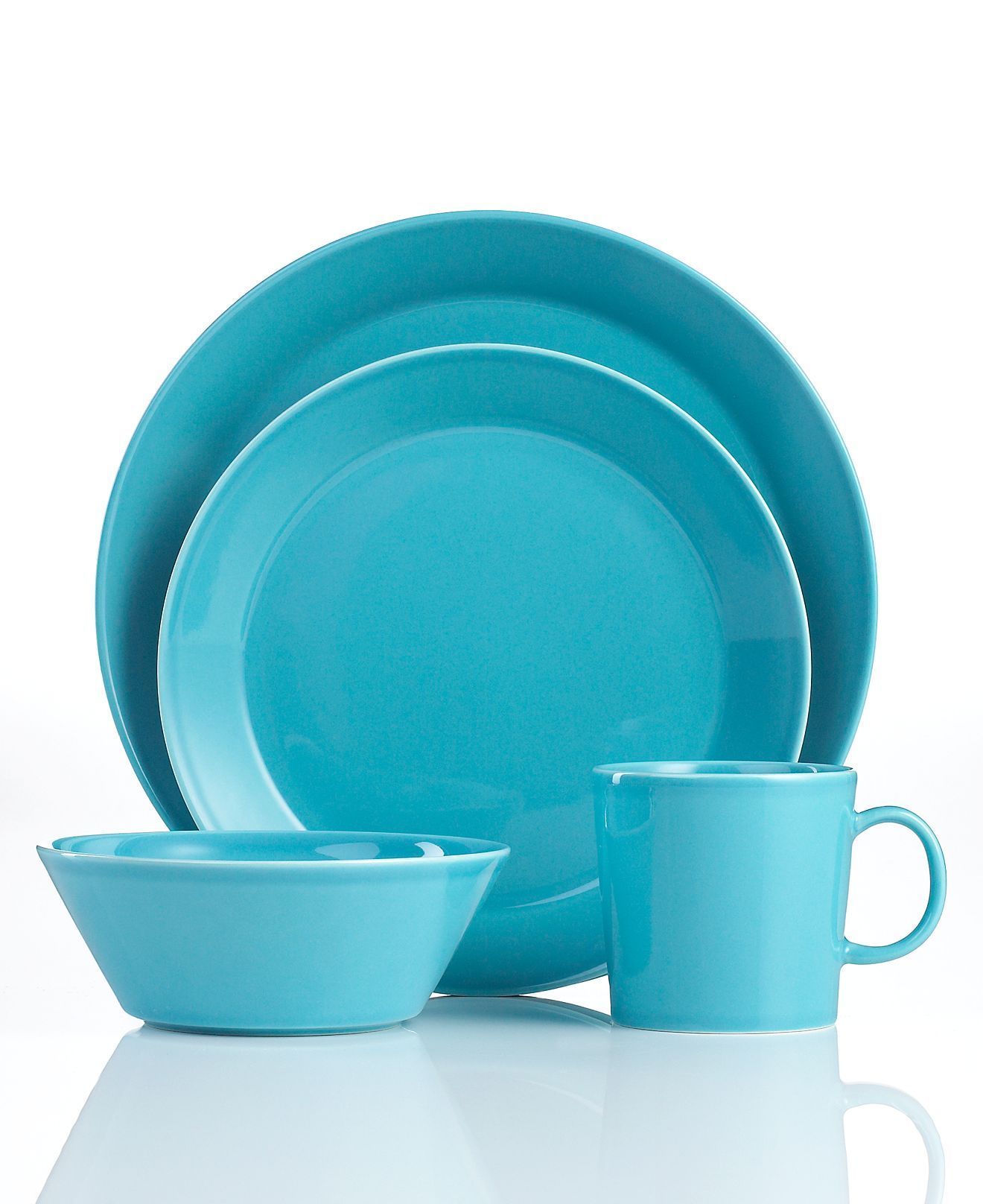
Mon Amie doesn't really go with our primary dishes, Iittala Teema in turquoise, but we both love it way more than the mug and bowl alternatives (Teema doesn't include serving bowls and the mugs are too small for daily use). We have a handful of red and blue Taika mugs like in the cartoon up there inherited from Wax's mom (the white one is ours), but they don't satisfy my wishes for dish-matching either and I plan to eventually get around to selling them on the Finnish equivalent of Craigslist. (They are the right size, though.)
cimorene: painting of two women in Regency gowns drinking tea (regency)
I had to turn replies back on at my design blog ([tumblr.com profile] designobjectory) because I invited readers to give me ideas for what to do to celebrate 7000 followers.

And now once again I am plagued by Reply Guys who for some reason don't want to reblog a post, so they aren't interested in sharing their thoughts with their followers, but rather think for some reason that the owner of a decorative arts blog will be interested in their opinion along the lines of "This furniture would be nice but it's ruined by the ugly legs 😐". I mean, yes, other people who see the post can see the replies, but they'd have to click through on purpose to read them, so I doubt it's really joining the public discourse on the subject.

Are they just trying to start a conversation? Is it like walking up to someone taking a photograph of a famous building and saying "It's a nice cathedral but the steeple is so awkward and clunky that it ruins the WHOLE thing" and then giving them an exaggerated grimace of distaste?

...Actually that would be so bizarre and hilarious IRL that I might respond much more positively to it this way, assuming the stranger-speaking approach wasn't scary. Like I guess at a tourist destination with other people around but not too much ambient noise it might not be alarming. But then again, they wouldn't be answering my post, just sharing the view.
cimorene: cartoony drawing of a woman's head in profile giving dubious side-eye (af klint bubble world)
Some of you may remember that when I quite recently got it into my head to make modern art icons, a few of my topics were Matisse's cut paper collages, the paintings of Hilma af Klint, and paintings by the art instructors from the Bauhaus.

Well, a couple of weeks ago, I discovered first that Ikea's current assortment includes several large Af Klint posters, and then that H&M Home is currently selling both Bauhaus posters and Matisse cutouts posters. For a second I was weirded out at the apparently staggering coincidence, but then I remembered...

...I got all three of these interests, originally, when I was browsing designs on Redbubble that are popular in the "Art" and "Art history" tags. (I got a bunch of stickers and then some cloth masks last fall.) This made me feel a bit silly.

But the question remains: where did they get it? I mean, I don't think Ikea and H&M got these trends from Redbubble, so I assume they represent trends in - poster art, or something like that, more broadly. Interior design perhaps? But what I don't know is what kinds of primary sources or whatever the Redbubble sellers have been plugged into that have informed them of this. I mean, and also the Ikea and H&M designers. Maybe there's a place somewhere where people are upvoting and downvoting vintage posters??? Maybe it's an obscure corner of Instagram. Maybe it's a social networking site I haven't heard of. I'm really curious now.
cimorene: An art nouveau floral wallpaper in  greens and blues (wild)
I use Pinterest to save things in advance that I can later post to my decorative arts blog, [tumblr.com profile] designobjectory, and the other day I got annoyed because Past Me had saved some pins to the wrong folders out of laziness (the algorithm guesses which folder you might want, and if you haven't been exclusively saving to that folder it's usually wrong, and it takes extra moves to scroll through the drop-down list or type to search them).

So I moved them around... and then got a compulsive tidying bug and deleted a bunch of old folders I haven't used in years, and then started reorganizing the folders that I do still use, going back through some of them and deleting things that are no longer relevant, and then reorganizing my biggest folder, which was for Art Deco/Bauhaus/Streamline Moderne/Machine Age, Art Nouveau, Arts & Crafts/Mission/Prairie Style. Arts & Crafts is a contemporary of Art Nouveau, and Art Deco evolved out of Art Nouveau with a substantial overlap between the periods and styles including many objects that show influences of both. And also I kind of like them both similar amounts, and they both appear in my favorite historical period (the 1920s-30s, that is), so when I started pinning that stuff I guess it made sense to put them together. But as of yesterday there were almost 2000 things in it, and it was just too big.

The Arts & Crafts movement of William Morris's wallpapers is my favorite aesthetic, and that, with its related movements, encompasses a wide range of distinct aesthetic threads. I spent almost all day yesterday separating it out into a bunch of subfolders and removing the more Art Deco-related stuff to another one.

The problem with sorting stuff related to one of my favorite hobbies is that I have so much fannish excitement and trivia floating around in my brain that it's tough to decide how finely to sort it. And also it's very easy to just get lost in the zone browsing through it and adding more images to the same categories because they're my favorites.

I couldn't stop there though, and I lost a lot of hours today just sort of noodling around, moving and deleting random things compulsively. We did move the Heteka (the vintage midcentury rustic steel single bedframe, now used as a daybed/bench) up to the library, so there's a lot more little stuff I can do around the house soon (hanging art, vaccuuming, clearing space for furniture painting projects in the dining room - sewing curtains and things...).

It stopped snowing, but it's ankle-deep out there again. On the plus side, this means it looks pretty again, I guess!
cimorene: an abstract arrangement of primary-colored rectangles and black lines on beige (bauhaus)
I posted a couple of weeks ago in enthusiastic praise of Soldier of the Mist. As soon as I finished it I read the sequel, Soldier of Arete. My dad said it was "Really good, but not as good as Soldier of the Mist" at the time, and I suppose I can endorse that, although it's only a little less great than the first book. It's a continuation of it, and in some ways perhaps feels like it has less action, or just less sweeping action, and like less mysterious and political things are happening? But I still didn't want to put it down, but drew it out a little because I didn't want to be finished with it.

In fact, Wolfe wrote a third book called Soldier of Sidon some twenty years after the first two, and I have it, but I didn't want to read it right away, in case it was disappointing in comparison. And it's probably appropriate to pause a bit, since he did, anyway.

However, then I had the problem that I couldn't really decide what else from my lengthy to-read list I felt like reading, because I didn't really want to read anything else. "More of this, or as close to it as possible" probably covers it. Actually I started reading a mystery set in ancient Rome, and it is more similar than most of the things high on my to-read list... but it still didn't exactly hit the spot, and I have been rereading fanfiction from my bookmarks instead.

And also, as I mentioned in my last post, I spent half a week or so reading back through the blog Retro Renovation (and then I ordered a book on the history of Finnish architectural style by the same author as our amazing Rintamamiestalo book... it's very exciting, but I anticipate it won't have the level of detail I want. What I really want is access to a massive trove of vintage Finnish advertisements and catalogs relating to home building and furnishings, and I suspect I might not even be able to find that at the library without going into Turku).
cimorene: An art nouveau floral wallpaper in  greens and blues (wild)
I mentioned before that Morris & Co, founded by William Morris for his wallpapers and textiles and furnishings etc, is still in business, and still printing his wallpapers (you know, some of them) from the original woodblocks. I'm a big fan of their website, as compared to other wallpaper manufacturers, now that I've gone through the agony of shopping for wallpaper myself (I didn't try to buy any Morris, partly because it was the wrong period, but even our wallpaper splurges cost like less than half of a Morris wallpaper. Although actually the splurge paper in our entry hall is by Sanderson, which is another brand owned by the same company now).

Anyway, I can't really fault them fot releasing new pastel, neutral, and mostly-white versions of Morris's exuberantly colorful baroque- and medieval-inspired designs: that's what's selling right now. They gotta make money. And at least they haven't stopped printing more historically accurate palettes either.

But! I totally CAN fault them for the fact that their website is borked and has been for weeks: a bunch of images won't load (navigation images, not product images) and the image labels are everywhere, getting in the way when you're trying to navigate.

I can also fault them for the fact that while the product descriptions on the old designs are unimpeachable, the product descriptions on the new designs have all been written as if in a text message or email composed on some harried British intern's phone while commuting, which is to say, they don't use punctuation correctly (or sometimes at all). Probably they should be paying their interns more or something. Or just hiring a professional copywriter, if that's what it takes to get your punctuation in order. William Morris wrote beautiful medieval romance pastiche, and it's an insult to his memory to have his wallpaper described in a style that feels like a pastiche of the Next webshop instead.
cimorene: cartoon woman with short bobbed hair wearing bubble-top retrofuturistic space suit in front of purple starscape (intrepid)
The name for the material that makes mid-20th-c. Murano glass lights/lamps look so incredibly biteable and candylike is cased glass.


1. Modern midcentury-style Italian mouthblown pendant lamp by the Murano masters at Millefiori
2. A vintage Yugoslavian blown glass pendant lamp
3. Vintage Italian pendant lamps by Venini


All the images were posted recently at my decorative arts Tumblr [tumblr.com profile] designobjectory under the tag lighting.

The effect is caused by a colored layer of glass fused over an opaline/milk glass white layer; cased glass is any combination of two or more differently-colored layers, often with the opaque white on the outside or all the layers colored, and often with the outer layer etched or cut away to create a design. Cutaway and etched cased glass effects apparently go back to ancient times. The most familiar examples to many, however, will be 19th century antiques, particularly the then-wildly-popular Bohemian art glass (often further embellished with gold leaf and other painted-on designs), as seen in the ornate red and white objects in the top rows of images here and our heirloom Bohemian cranberry glass candy bowl here:


I haven't found a specific term for the color-over-milk cased glass that produces this luscious candy effect, but it was a very popular technique in the midcentury, not only in Murano glass, obviously. You can see a lot of Empoli (art glass center near Florence) cased glass from the period in luscious rows here.
cimorene: Blue text reading "This Old House" over a photo of a small yellow house (this old house)
The dog we were sitting (and the cats) got a little more relaxed and settled each day. Wednesday she eventually settled in and Wednesday night we were allowed to sleep normally-ish, and Thursday evening they came to pick her up just as she had relaxed enough to play with her toys and lie on the sofa letting me scratch her belly. She's a sweet little dog and she was a delight, but it was quite a relief to relax in her absence. The bunnies did new binkies, Tristana zoomed all around the house, and both the cats gorged themselves after a few days of eating sparingly.

The curtains we ordered finally arrived too, and we put up some trim that had been lying around waiting to be reinstalled for a year (I still have to sand and paint it, along with all the windows which are in a truly atrocious state). We wanted a retro-looking print that would harmonize with the architectural style of our 1950 early modernist house, and current trends in window treatments were really working against us! I must've spent at least eighty hours searching for some in the last year or so. (We were willing to splurge a LITTLE on the curtains, but not to the extent of ordering Marimekko fabric. We could have found ten Marimekko fabrics we liked enough for curtains without pausing for breath, but they cost 40€/m and up and our two livingroom windows took almost 8 meters).


This fabric is Lilleville, from Eurokangas, and was unbranded (weird but whatever). I also removed the old plastic hardware from these drawerfronts, spackled the holes, covered the surfaces with contact paper and gave them some new hardware (from Ikea, because I splurged on more expensive exact replicas in the kitchen instead of Ikea retro hardware which would've been brushed nickel finish instead of shiny chrome, and I later regretted it and vowed to henceforward just use the Ikea). I've also bought a hairdryer specifically for smoothing the corners of the contact paper - we've never owned one and I haven't heat-styled my hair in twenty years. I still have another identical little chest of drawers to do that lives at the desk in Wax's library office.

We called the chimney sweep a week ago Friday, but he didn't call back all week, so we have to try again. It was so busy all week that I forgot, though. It's getting dark earlier now, so we have to hurry!
cimorene: An art nouveau floral wallpaper in  greens and blues (wild)
When Wax's mom died we inherited her sofa, which she had recently bought second hand but in mint condition from one of her posh relations. This sofa is a solidly-built piece of construction with the frame made of massive pieces of solid wood here in Finland, custom upholstered in multiple beautiful tapestry fabrics that were coincidentally in MIL's favorite color (eggplant purple). It was waiting over here on our side of the house with lots of other big bits of furniture while the renovations were ongoing, because it was too big to fit into the other side while our furniture was all crammed into two rooms there. And while it was here, the BB escaped over to this side a few times and acquired the hobby of climbing up it to perch on the top (it was lying on its side to save space, so it made a very tall perch)... and shred the upholstery. Before we noticed this and had any way to put a stop to it, she had already destroyed the upholstery on the front of the arms to the point that the only way to save it would have been having it professionally reupholstered.


So when we moved over to this side, we started using it, although of course we knew it had to be replaced. It's a little too large for the room anyway, I suppose. But meanwhile it's quite comfortable, and since the upholstery was a lost cause we left it alone. By the time Tristana joined the household the fabric was completely gone on the fronts of the armrests, and she loved to play with it so much that she quickly started pulling out bits of polyfill. We caught her trying to eat a bit of the polyfill recently so we carefully wrapped some furniture covers around both ends of the sofa to forestall her... but instead she determined that the furniture covers are an amazing toy! See, she can duck under the cover and climb up the side of the sofa to the top of the armrest and sit there under the cover, attacking the upholstery randomly and wiggling around like a maniac. She's under there way MORE often now than before, actually.

This morning she spent like an hour playing inside the cover and then curled up on the arm of the sofa (still inside the cover) and took a nap. So we gave up and ordered an Ikea Ektorp loveseat in teal, which was what I'd been intending to get around to all along, and they'll take the old one away to recycle when they deliver it in a couple of weeks on Wax's day off.


I love Ektorp. I've wanted one of the big fat ones for ages, since I first sat in the models at an Ikea I suppose, when I moved to Finland. Also I love the oversized, round, overstuffed (English cottage?) shape. they're just delightful for lounging in. The Ektorp sofa is considerably larger than our Klippan that we've had most of the time though, and it never really occurred to me until recently that we could just get a 2-person one. This livingroom is ironically perhaps the smallest livingroom we've ever had (though maybe not the narrowest?) - Wax disagrees about this point - but regardless of any other features, this room has every wall broken up by doors or windows near the center, so there's almost no space to put the furniture if you didn't want to, I guess, make a little island conversation group around a coffee table in the center of it. Which is perhaps what people all did with their livingrooms in 1950 when nobody anticipated focusing your eyes continually on a screen attached to one of the walls. We had two of the smaller Ikea Ektorp Jennylund chairs for years, which share the rounded look but are smaller scale - even the arm radius is smaller, and the seat is considerably so.


Wax's mom had happily adopted them but now we're stuck with them again since her death. Wax's aunt has said she wanted them ages ago, but she's just left them here indefinitely so I guess if we don't drive an hour and a half to drop them off with her they're ours (to cart to the dump presumably because they're rather in the way as it is). So we know from experience that the thick cotton twill fabric of Ektorps is not nearly as claw-sharpening friendly to cats as this tapestry stuff. Tapestry fabric is evidently one of the nicest fabrics in the world to dig your claws into. Also this loveseat will be small enough that we can hopefully put some more sharpening toys and things to destroy around it to distract the little mischief.

Profile

cimorene: cartoony drawing of a woman's head in profile giving dubious side-eye (Default)
Cimorene

December 2025

S M T W T F S
 1 23 4 56
7 89 1011 1213
14 15 1617 18 1920
21 222324252627
28293031   

Syndicate

RSS Atom

Most Popular Tags

Style Credit

  • Style: Practically Dracula for Practicalitesque - Practicality (with tweaks) by [personal profile] cimorene
  • Resources: Dracula Theme

Expand Cut Tags

No cut tags
Page generated 24 Dec 2025 04:50 am
Powered by Dreamwidth Studios